
St. Vincent de Paul
St. Vincent de Paul (1581–1660) was a French Catholic priest renowned for his extraordinary compassion, humility, and dedication to serving the poor. He is widely regarded as the patron saint of charitable organizations, and his name has become synonymous with acts of kindness and social outreach throughout the world.
Born into a modest farming family in the village of Pouy, France, Vincent was ordained a priest at the young age of 19. Though initially ambitious and drawn toward a comfortable clerical career, his life took a profound turn after encounters with the poor and marginalized opened his eyes to the deep social and spiritual needs around him.
Moved by these experiences, Vincent dedicated his life to serving the suffering and forgotten. He founded the Congregation of the Mission (also known as the Vincentians or Lazarists), a community of priests focused on evangelizing the rural poor and training clergy. Alongside St. Louise de Marillac, he also co-founded the Daughters of Charity, a revolutionary community of women who served the sick, orphaned, and destitute outside the walls of convents—unusual for that time.
St. Vincent’s work extended beyond physical charity. He emphasized dignity, compassion, and systemic change, organizing hospitals, shelters, and vocational training for the underprivileged. He also worked to reform the clergy and was a key figure in the Catholic Counter-Reformation in France.
St. Vincent de Paul died in 1660 and was canonized in 1737. His legacy continues through countless institutions, particularly the Society of St. Vincent de Paul, founded by Blessed Frédéric Ozanam in 1833, inspired by his values and vision.
St. Vincent’s feast day is celebrated on September 27—a day to remember the power of faith in action and the enduring call to love and serve the least among us.

Blessed Frederic Ozanam
Frédéric Ozanam** (1813–1853) was a French scholar, lawyer, and social reformer best known as the principal founder of the **Society of St. Vincent de Paul**, an international Catholic lay organization devoted to serving the poor. A man of deep faith, intellect, and compassion, Ozanam sought to bring Christian values into action, combining charitable work with a commitment to social justice.
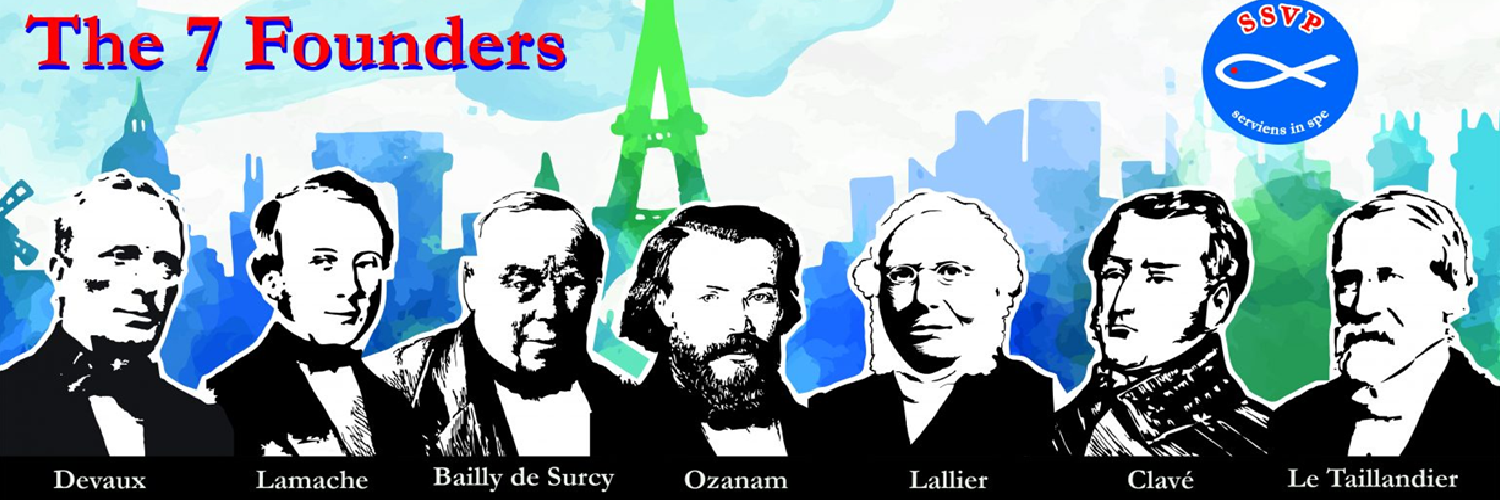
Born in Milan and raised in Lyon, Ozanam was a brilliant student who went on to study law and literature in Paris. During his university years, he was deeply affected by the social injustices he witnessed in post-revolutionary France. In response to criticism that the Church no longer served the poor, he and a group of friends started the "Conference of Charity" in 1833, which soon became the Society of St. Vincent de Paul, named after the 17th-century saint known for his work with the marginalized.
Ozanam’s vision extended beyond mere acts of charity. He believed in addressing the root causes of poverty and advocated for workers’ rights, fair wages, and better living conditions. His writings and public lectures reflected his conviction that faith must be lived through action—helping others with humility, love, and respect.
A devoted husband and father, Ozanam balanced his family life with academic achievements and charitable efforts. He died young, at the age of 40, but his legacy continues to inspire millions around the world.
Frédéric Ozanam was beatified by Pope John Paul II in 1997, and his life remains a powerful example of Christian service, intellectual integrity, and social commitment.
The Society of Saint Vincent de Paul
The Society of Saint Vincent de Paul is an international, voluntary, charitable organization of Catholic laypeople dedicated to serving Christ by reaching out to the poor, the afflicted, and the marginalized.
The Society was founded in 1833 by Blessed Frederic Ozanam, a law student in Paris, together with six of his friends. The organization was named after Saint Vincent de Paul, the patron saint of the poor. The Society’s statutes were first published in 1845, and in the same year, Pope Gregory XVI recognized the Society as a lay organization of the Holy Catholic Church. Today, the largest lay organization has spread in 155 countries around the world.
In India, the Society officially began in 1863 in Bombay. The Superior Council of India (later renamed the National Council of India) was established on 15 August 1953 and received its constitution from the Council General International on 9 November 1953. In 1981, the Society in India was officially recognized by the CBCI as a national Catholic organization. At present, there are 87 Central Councils in India, with over 40,000 active members serving the Society’s mission.
SSVP Manual Translation and Verapoly
The first Manual of the Society of St. Vincent de Paul was published on 8th December 1835. As the Society expanded globally, the Manual underwent several revisions to meet changing needs and circumstances. In 1954, the Council General International completed the comprehensive revision, with its English translation released in 1958.
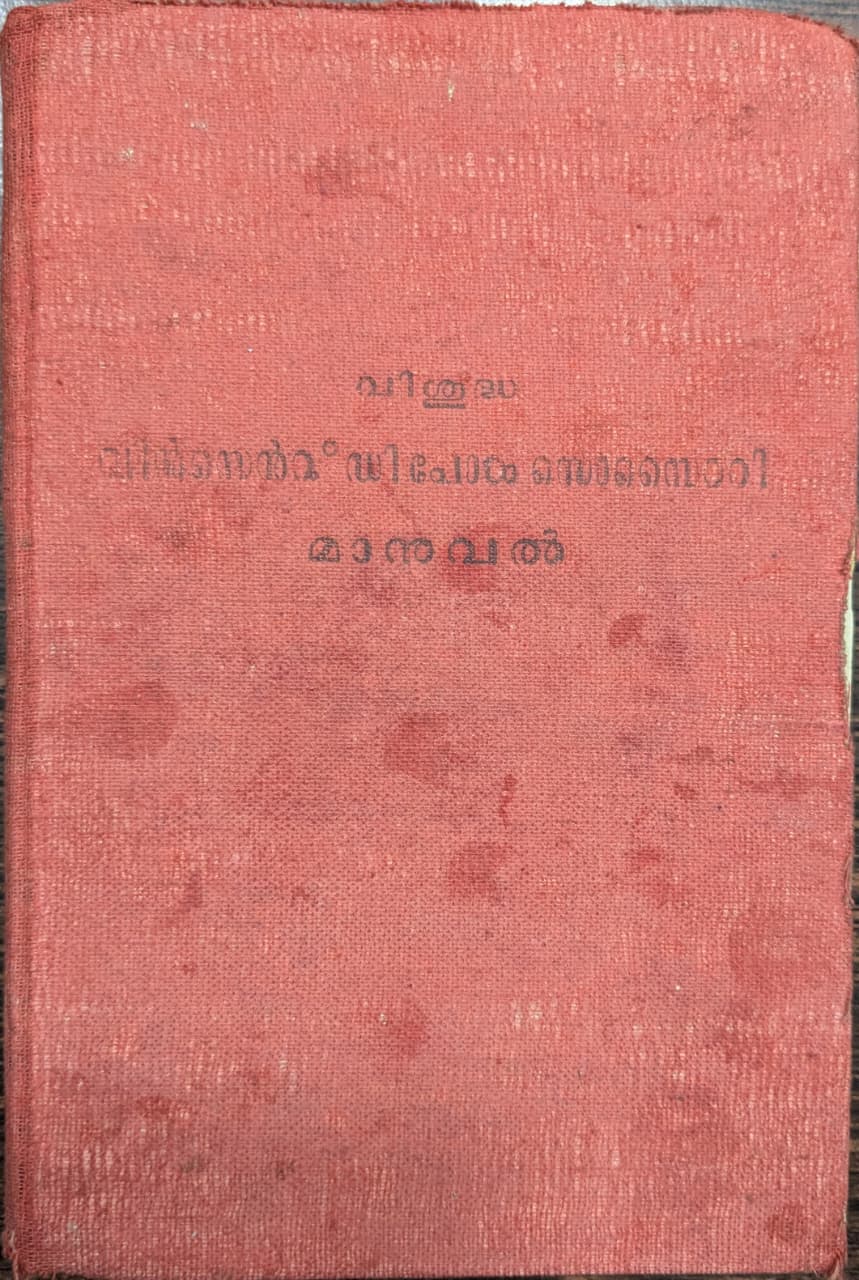
Recognizing the need for translations in members’ native languages, the then Superior Council of India sought the assistance of the Catholic Bishops’ Conference of India. The task of translating the Manual into Malayalam was entrusted to Most Rev. Dr. Joseph Attipetty, then Archbishop of Verapoly. He, in turn, assigned the responsibility of reviewing and correcting the translation to Rev. Fr. Philip Komaranchath O.C.D. and Very Rev. Fr. Peter Vdassery was also appointed as editor.
This mission was completed, and in 1961, the first official Malayalam translation of the International Manual of the Society of St. Vincent de Paul was printed at the IS Press, Ernakulam, and published by the Central Council of Verapoly, greatly benefiting the Society’s growth in Kerala. A copy of this is still preserved at the CC office.
In 1979, the National Council of India revised the Society’s rules and regulations with provisions specific to India. The translation of this Indian edition was once again entrusted to Rev. Fr. Philip Komaranjath and Rev. Fr. Peter Vadassery, who had earlier translated the International Manual. The second Malayalam version of the National Manual was published in 1982. Subsequent editions were published in 1991,2008,2012, and 2022.